

Yogi Yojana |
- {Apply} Haryana Kaushal Rojgar Nigam Portal Online Registration 2022, Eligibility, Application Status | हरियाणा कौशल रोजगार निगम
- Goa Griha Laxmi Card Scheme 2022: Rs. 5000 per Month to All Women by West Bengal Based TMC Party
- [Apply] PM Fasal Bima Yojana Online Registration Form | PMFBY Application Status 2022 at pmfby.gov.in
- PM Modi's Affordable Rental Housing Complexes (ARHC) Scheme Guidelines - Complete FAQ's
| Posted: 06 Jan 2022 06:21 AM PST Haryana Kaushal Rojgar Nigam Portal Online Registration | कौशल रोजगार निगम हरियाणा ऑनलाइन पंजीकरण 2022 | Haryana Kaushal Rozgar Nigam Apply Form | HKRN Application for Contractual Employees | हरियाणा कौशल रोजगार निगम एप्लीकेशन स्टेटस Dear readers, Haryana Kaushal Rojgar Nigam 2022 online registration and login process starts at http://49.50.103.13/ portal. Under the leadership of Chief Minister Manohar Lal Khattar, the state government has setup Haryana Kaushal Rozgar Nigam (HKRN) to make all appointments which were earlier being done under the outsourcing policies. Youths hired through HKRN system will get EPF, ESI benefits. Read this article till the end to know about eligibility, application status and apply online process for posts which were earlier filled through outsourcing. About Haryana Kaushal Rozgar Nigam (HKRN)Haryana Kaushal Rozgar Nigam Limited has been incorporated under the Companies Act, 2013 on 13th October, 2021. It has been set up with the objective of providing contractual manpower to all Government entities in Haryana in a transparent, robust and equitable manner. It will act as the authorized agency for providing contractual manpower in Haryana.Haryana Kaushal Rozgar Nigam, in the process of providing contractual manpower, will focus on:
Board of Directors of Haryana Kaushal Rojgar NigamWe are mentioning the board of directors of Haryana Kaushal Rojgar Nigam through the image.  Haryana Kaushal Rojgar Nigam Portal Registration LinkHaryana Kaushal Rozgar Nigam portal is launched through which govt. will make contractual appointments on the basis of merit. It is a new and transparent system which is being implemented by CM Manohar Lal Khattar. To access Haryana Kaushal Rojgar Nigam portal, link is http://49.50.103.13/. With the help of newly launched HKRN system, youth can apply online for posts earlier filled through outsourcing. All those youths who are hired through the new HKRN system will get all the benefits such as EPF, ESI facility among others.Department Login at Haryana Kaushal Rojgar Nigam


In case of any suggestion or feedback, please drop an email to below mentioned mail id hkrn.gov@gmail.co Benefits of Applying Online at Haryana Kaushal Rojgar NigamHaryana Kaushal Rojgar Nigam portal registration and login process will prevent exploitation of employees working on contractual basis. Haryana Kaushal Rozgar Nigam is going to play a pivotal role in ensuring transparency and ample employment opportunities to eligible candidates.All the contractual appointments are made on merit basis under this new and transparent HKRN system. Outsourcing employees will be engaged through Haryana Kaushal Rozgar Nigam in the state. Employees appointed through various outsourcing agencies in various departments were making complaints about not getting EPF and ESI facility, now they will get all these facilities. Deserving youth will get employment and would be able to attend training sessions that are conducted for their skill development. Contact UsAddress - Haryana Kaushal Rozgar Nigam Limited, Skill Development and Industrial Training Department, Haryana, Kaushal Bhawan, Sector 3, PanchkulaE-mail ID - hkrn.gov@gmail.com |
| Goa Griha Laxmi Card Scheme 2022: Rs. 5000 per Month to All Women by West Bengal Based TMC Party Posted: 06 Jan 2022 06:18 AM PST Dear readers, West Bengal based Trinamool Congress party promises Rs. 5,000 per month to all women leading household in Goa. TMC party promises to launch Griha Laxmi Card Scheme if being elected by the people. Higher ranked TMC leaders announced to start Griha Laxmi Scheme as soon as it comes victorious by the voting of people in the upcoming assembly elections in Goa. It is a pre poll promise to lure Goa voters in favour of Mamata Banerjee led party. Griha Laxmi Card Scheme of West Bengal Based TMC PartyTrinamool Congress (TMC) announced Griha Laxmi Scheme in Goa on 11 Dec 2021. Under this scheme, every woman head of a household will get Rs. 5,000 as a cash transfer every month irrespective of their income. TMC MP and Goa state incharge Mahua Moitra said "This is going to be universal coverage which means you don't have to belong to any particular caste or community, you don't have to belong to a particular economically deprived section or a BPL (below poverty line) category. Everybody gets the scheme."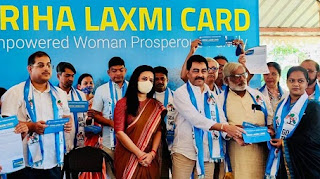 Earlier congress party also assured jobs for women while AAP has said it will give Rs. 1,000 per month to all adult women. Inaugurating the Griha Laxmi card at the International Centre in Dona Paula, Moitra said, "We will be taking this door-to-door in Goa." Impact of Griha Laxmi Scheme in GoaGriha Laxmi Scheme is a pioneering and a transformative scheme that had seen great success in West Bengal. In a similar manner, Griha Laxmi Card scheme will be executed as and when West Bengal based TMC party come into power depending on the good will of the people of Goa. People can then make registration for the Griha Lakshmi scheme where female head of the household will be as defined in the ration card.Congress / AAP Party Announcements for Women Household in GoaIn poll-bound Goa, the TMC's announcement comes a day after AICC general secretary Priyanka Gandhi addressed a women's convention in South Goa. She said increased recruitment for women in the police force, credit of upto Rs. 1 lakh for self help groups and 30 percent government jobs for women. According to the Chief Election Officer records of Goa, of its 11.47 lakh electors, 5.87 lakh are women. On December 5, AAP national convenor and Delhi Chief Minister Arvind Kejriwal had announced in Goa that it was his party's "guarantee" that if AAP formed the next government in Goa, it will give Rs. 1,000 per month to all women above the age of 18 years. He said the "world's biggest women empowerment programme" would not be limited to one woman per household but every adult woman in the family would be eligible to avail the benefit. Kejriwal said "no government in any part of the world" had implemented such a scheme. Griha Laxmi to Replace Existing Griha Aadhar SchemeBJP-run state government of Goa is already running Griha Aadhar scheme providing Rs. 1,500 crore aimed at supporting homemakers. TMC party official stance is that the new Griha Laxmi Scheme, unlike Griha Aadhar, would have no income cut-off and its would reach 3.5 lakh households unlike Griha Aadhar that reaches 1.5 lakh household. It will cost the government Rs. 1,500 crore to Rs. 2,000 crore that would be about 6% to 8% of the state's budget.Benefit of Giving Rs 5000 per Month to All Women HouseholdIf a woman gets Rs 5,000 in her hand, she will buy clothes for her children, she will buy some necessary medicines, she will buy a lot of things that she could probably not have asked her husband for. That money goes into the system and goes around much quicker than that of a one-salaried household in India. That money hits the economy faster, it gets churned around faster and the multiplier effect is greater.Designing of Griha Laxmi Card SchemeAccording to TMC party leaders, Griha Laxmi Scheme was designed based on various studies. The latest study has been by Abhijeet Banerjee, who is a Nobel Laureate hailing from the state of West Bengal, who has stated that after the demonetisation and after Covid, both of which have shrunk the economy and people have less disposable income in their hands, the best way to kick-start the economy and kick-start the local communities is to give them more cash in their hand. This is not the time when governments should look at inflationary pressures. This is when governments should actually look at liquidity and pumping money.Data is taken from Indian Express article accessible through the link - https://indianexpress.com/article/cities/goa/goa-trinamool-congress-5000-women-household-7667607/ |
| Posted: 06 Jan 2022 06:10 AM PST Central govt. invites Pradhan Mantri Fasal Bima Yojana Online Registration Form 2022 at pmfby.gov.in. People can now apply online for PMFBY Scheme and check Prime Minister Fasal Bima Yojana Application Status. The official website for PM Fasal Bima Yojana is now functional for farmers to apply for crop insurance. In the PMFBY Scheme, farmers can apply online for agriculture insurance cover and to get financial assistance in case their crops gets damaged. All the damages such as caused due to heavy rain, natural calamities, pests or diseases are covered in Pradhan Mantri Fasal Bima Yojana. The interested farmers can also know premium amount using insurance premium calculator & can make a complain at pmfby.gov.in. Recently, the central govt. has made PMFBY Scheme optional. The premium for PM Fasal Bima Yojana is set to 2% for Kharif and 1.5% for Rabi crops. This scheme was firstly launched on 18 February 2016. The registration lines for PMFBY crop insurance scheme 2022-23 are open. PM Fasal Bima Yojana Online Registration Form 2022Below is the complete process to fill PMFBY online registration form 2022:-


PMFBY Farmer Login - Apply OnlineAccordingly, people can now make "Sign In" and make login. The PMFBY login page will appear as shown below:- Check Pradhan Mantri Fasal Bima Yojana Application StatusVisit the same official website at pmfby.gov.in. At the homepage, click at the "Application Status - Know Your Application Status on every step" tab as shown below:-  Afterwards, the PMFBY Application Status checking page will appear as shown below:-  Here farmers can enter their PMFBY receipt number and click at the Check Status button to complete the PMFBY status checking process. |
| PM Modi's Affordable Rental Housing Complexes (ARHC) Scheme Guidelines - Complete FAQ's Posted: 06 Jan 2022 06:09 AM PST Affordable Rental Housing Complexes Scheme Guidelines 2022 has been released by the central government. Here is the complete set of frequently asked questions (FAQ's) about ARHC. In this article, the entire details are mentioned which are also available at the official website at arhc.mohua.gov.in In this article, we will tell you about the various aspects of the ARHC Scheme 2022.  PM Affordable Rental Housing Complexes Scheme (ARHC) FAQ'sA. General Information1. What is Affordable Rental Housing Complexes (ARHCs)? Affordable Rental Housing Complexes (ARHCs) is a sub-scheme under Pradhan Mantri Awas Yojana- Urban (PMAY-U). ARHCs means a listed project with a mix of at-least 40 Dwelling Units (DUs) and Dormitories along with basic civic infrastructure facilities such as water, sanitation, sewerage/ septage, road, electricity along with necessary social/ commercial infrastructure for urban migrant/poor of EWS/LIG categories. DUs will comprise of single bedroom up to 30 sqm/ double bedroom up to 60 sqm with living area, kitchen, toilet and bathroom and Dormitory Bed of up to 10 sqm carpet areas each. A maximum of one-third units (33%) in a project with 2 bedrooms, living room, kitchen, toilet and bathroom is allowed.  2. What is the need of Affordable Rental Housing Scheme? Due to COVID-19 pandemic, massive reverse migration of labourers/urban poor has happened. These migrants generally live in slums, informal/ unauthorised colonies or peri-urban areas to save on high rental charges. They may not be interested in ownership housing and generally look for affordable rental alternatives. ARHCs aim to improve ease of living of urban migrants/poor by providing them decent accommodation with all basic amenities near their place of work at affordable rent. 3. What is the coverage of the scheme? This scheme will be implemented in all Statutory towns, Notified Planning Areas, and areas of Development/ Special Area Development/ Industrial Development Authorities. 4. What is the duration of scheme? Project proposals under ARHCs will be considered upto March 2022. 5. What are the aims and objectives of the ARHCs Scheme? i. To address the vision of 'AatmaNirbhar Bharat' by creating affordable rental housing for urban migrants/ poor. ii. To provide dignified living with necessary civic amenities near their workplace. iii. To create conducive ecosystem for Public/ Private Entities to leverage investment in rental housing. 6. What is the project period for ARHCs? Project period is 25 years from the date of commencement of operation as ARHCs. 7. How ARHCs will be implemented? ARHCs will be implemented through two models: • Model-1: By utilizing existing Government funded vacant houses by converting them into ARHCs under Public Private Partnership. • Model-2: Construction, Operation and Maintenance of ARHCs by Private/ Public Entities on their own vacant land. 8. Who are urban migrants for ARHCs? Urban migrants for ARHCs means a person or groups of people/ families of EWS/ LIG categories, who take a conscious decision to move away or relocate from their village / towns to other cities/ towns temporarily or permanently, for seeking employment opportunities/ education/ health visits etc.They may include labour, urban poor (street vendors, rickshaw pullers, other service providers etc.), industrial workers, migrants working with market/ trade associations, educational/ health institutions, hospitality sector, long term tourists/ visitors, students or any other persons of such category. 9. How will ARHCs be implemented? ARHCs will be implemented by Private and Public agencies as Concessionaire/ Entity. 10. Can houses constructed under various schemes of Central/ State Governments/ UTs/ Parastatals/ Private entities be converted into ARHCs? Vacant houses constructed under various schemes of Central/ State Governments / UTs / Parastatals / Private entities can be converted into ARHCs. 11. Where can one find technical and operational guidance to implement ARHCs? ARHCs Operational Guidelines giving technical and operational details, issued by MoHUA is available on the ARHCs website: www.arhc.mohua.gov.in. 12. Where can one find the status of ARHCs Scheme? Location and Project wise details of ARHCs including occupancy details will be available on ARHC website: www.arhc.mohua.gov.in and States/ UTs/ ULB/ Parastatal/ Concessionaire/ Entity will be responsible to update the information periodically. 13. What is the Monitoring mechanism of ARHCs? ARHCs will be monitored by concerned States/ULBs. 14. Will there be any mid-term evaluation of ARHCs? Midterm evaluation of ARHCs will be carried out by respective States/ MoHUA through an independent agency. 15. Is there any provision for social audit of ARHCs? Social Audit of ARHCs will be carried out by MoHUA through an independent agency. 16. Will there be any accreditation mechanism for ARHCs? Accreditations of ARHCs will be carried out by ULBs through an independent agency. B. Beneficiaries of ARHCs17. Who can be a beneficiary of ARHCs? Beneficiaries for ARHCs will be urban migrants/poor from EWS/LIG categories including labour, urban poor (street vendors, rickshaw pullers and other service providers), industrial workers along with migrants working with market/trade associations, educational/health institutions, hospitality sector long term tourists/visitors, students or any other persons of such categories. 18. Are the PMAY (U) beneficiaries eligible for availing the benefits of ARHCs Scheme? Yes, PMAY (U) beneficiaries who are urban migrants and do not have PMAY (U) house in the same city, are eligible for availing the benefits of ARHCs Scheme. 19. Why this scheme is limited to urban migrants and poor only? It includes all eligible individuals who are from EWS/ LIG category and urban migrants/ poor as defined in the PMAY (U) guidelines and ARHC guidelines and exclusively designed for all target beneficiaries to provide dignified living. 20. Is there any preference under ARHCs for allotment? Preference shall be given to persons belonging to Scheduled Castes/Scheduled Tribes/Other Backward Classes, Widows and working Women, Divyang, Minorities, subject to beneficiaries being from EWS/LIG segments. 21. Can a migrant avail benefit in a different city of his home State? Yes, the migrant will be entitled to get the benefit of the scheme in any other city of his/her home State. For example: a person from his native place Gorakhpur, Uttar Pradesh goes to Kanpur for earning as migrant , he will be eligible to avail the benefit of ARHC in Kanpur. 22. What documents will be needed by the tenants to get house in ARHC? Allotment of single bedroom/ double bedroom/ dormitories is responsibility of the implementing agency i.e. Entities/ Concessionaires. Aadhaar or any other Govt. approved identification documents will be mandatorily required for allotment in ARHCs. 23. Is there any verification required before allotment of ARHCs to tenants or aggregators? Yes, verification of credential of individual/ tenants / aggregators is required as per State/ UT/ ULB policy. 24. How long can tenants stay in ARHC? The tenants can stay as per the mutual agreement with Concessionaire/Entity subject to compliance with conditions mentioned in Agreement. 25. Will students be able to get accommodations under ARHC scheme? Yes, students can get accommodations in ARHCs, who belong to EWS/LIG categories. 26. Can a Group of persons with specialized skills such as shoe making, tailoring, catering etc. take accommodation in ARHC? Yes, however ARHCs shall only be used for residential purpose and no commercial activities shall be allowed inside ARHCs. 27. How to apply for getting residential unit/ dormitory in ARHCs? Individual/ Entities/Organizations/ Aggregators may book their requirement of houses through website i.e. www.arhc.mohua.gov.in. Concessionaire/ Entity may also tie up with other Entities/Organizations or get migrant labour/ urban poor through Aggregators. 28. What will be the rent for single/double bedroom units/dormitories? For ARHC, Model I affordable rent will be fixed based on local market survey by ULB and Concessionaire and for Model-II rent shall be fixed by Entity based on the local survey. 29. What will be the mechanisms for paying rent? Rent may be paid by such agencies deducting directly from the salary/ fee/ any kind of remuneration etc. of tenants/occupants. C. Concessionaire/ Entity30. Who is Concessionaire? Concessionaire means Public/Private agencies, organizations, industrial bodies/ associations, institutions implementing ARHCs under Model- 1. 31. Who is an Entity? An Entity means Public/Private bodies including landowners, developers/ builders, promoters, manufacturing units, industries, institutions, associations, Central/State government organisations/ Parastatals implementing ARHCs on their own available vacant land under Model- 2. 32. How the concessionaire will be selected? Concessionaire will be selected by the concerned ULB through a transparent bidding process based on the model RFP (tender document) circulated by MoHUA. 33. What will be the selection criteria for Concessionaire? Concessionaire will be selected through a transparent process by ULBs. While bidding, affordable rental amount and period of concession shall be fixed parameters and selection of Concessionaire will be made on the basis of bidder offering maximum positive premium to ULBs. In case of negative premium, bidder requiring lowest negative premium will be selected and will be eligible for Viability Gap Funding (VGF). 34. What will be the shortlisting criteria for Entities under Model-2? Entities will be selected through an open transparent process of EoI. Participating entities will be shortlisted who fulfil the evaluation criteria as per EoI. 35. Is formation of consortium allowed in ARHCs? Consortium will be permissible through partnering with other agencies for participating in the tender process for project financing, management, implementation and operation of ARHCs. 36. What would be the responsibilities of a Concessionaire? Concessionaire would invest in making vacant houses livable (Refer Sl No 51) by repair/retrofit the rooms/buildings and filling up internal infrastructure gaps like water, sewer/septage, sanitation, internal roads etc. in the ARHCs projects. 37. Will ARHCs be made by Government bodies or by private sector? ARHCs will be made by State Govt. /UTs/Urban Local Bodies/ Public Sector Undertakings and Private Entities who participates in the RfP/EoI process and selected / shortlisted after fulfilling the criteria of RfP/EoI. 38. Are Central/State PSUs can construct ARHCs on their available vacant land? Yes, Central/State PSUs can construct ARHCs and provide accommodation for their employees at affordable rent who belong to EWS/LIG category. 39. Can rental housing be developed on freed up land after demolition of old/existing housing? Yes, it is allowed as new construction, provided it meets minimum number of 40 DUs or equivalent dormitories as specified under the scheme guidelines. 40. How high land prices are dealt under the scheme to make it attractive proposition for them? A number of incentives/benefits have been provisioned under ARHCs to make the project financially viable. 41. Who will bear the cost of Operation & Maintenance? The cost of Operation & Maintenance will be borne by the Concessionaires/Entity. 42. Who will bear the minor/ major/ associated repair cost during the ARHC period? Concessionaire/Entity will bear minor/major repair and other associated cost during the O&M period i.e. 25 years from the date of starting of project on rent. 43. How Concessionaires/Entity will cover-up the minor/ major/ associated repair cost? Concessionaire/Entity, while preparing the final DPR will include all required minor/major and associated cost in both the models. State / ULB/ Parastatal will not borne any additional cost after approval of project/O&M period and Concessionaire/Entity will be responsible for all the activities. 44. Who will be responsible for security of ARHCs? Concessionaire/Entity will entirely responsible for making necessary arrangements for safety & security of ARHCs buildings/ tenants/ vehicles within the premises through CCTV/ security guards or any other means. D. Financial Provisions/Incentives45. What are Incentives proposed for Concessionaire/Entities to develop and operate ARHCs? • Concessional Project Finance under Affordable Housing Fund (AHF) & Priority Sector Lending (PSL). • Exemption in Income Tax & GST on any profit & gains from ARHCs • Single window approval of ARHC projects (within 30 days). • Trunk infrastructure upto the project site. • Municipal charges at par with residential property. • Technology Innovation Grant (TIG) for promoting use of innovative technology. • 'Use Permission' changes, if needed. • 50% additional FAR/FSI, free of cost. 46. What is Use Permission? Use Permission means allowing construction of ARHCs by the concerned Planning Authorities by including it in the list of Permissible Activities, designated in a particular Land Use Zone, as determined in the Zoning Regulations of local Master Plan/Development Plan. Permission may also be granted to use more than the existing permissible limit, without the need of changing land use. 47. What is Technology Innovation Grant (TIG)? TIG under Technology Sub-Mission (TSM) of PMAY (U) is to facilitate adoption of innovative, sustainable, green and disaster-resilient technologies as well as building materials for faster and quality construction of ARHCs. 48. What is the condition to avail TIG for ARHCs? TIG will be applicable only for the use of new technology in construction of a new building under ARHCs. 49. How much time period is permissible for construction of projects using TIG? 18 months from the date of statutory approval required for commencement of construction of the project. 50. How much grant is provisioned under TIG? TIG of Rs. 1,00,000/- per dwelling unit in case of double bedroom (up to 60 sqm carpet area), Rs. 60,000/- per Dwelling Unit (up to 30 sqm carpet area) in case of single bedroom and Rs. 20,000 per Dormitory Bed (up to 10 sqm carpet area) shall be released by MoHUA to Entities. 51. What is the Role of BMTPC in ARHCs? BMTPC will appraise the projects/DPR forwarded by the State/UT using new technologies to ascertain eligibility for TIG as mandated under TSM. After approval from CSMC, MoHUA through BMTPC will release TIG amount to the entities as per defined procedures in the Operational Guidelines. 52. What is Viability Gap Funding (VGF)? Existing Government funded vacant houses are already lying vacant in Cities for long time which requires immediate repair/retrofit and filling up infrastructure gaps to make them livable. Normally, entire amount will be invested by the concessionaire to make them livable. However, in special circumstances VGF may be required by the Concessionaire and this gap funding will be done by ULBs to make ARHCS commercial viable as per Operational Guidelines. 53. What will be the tax liabilities for landowners or landlords under this scheme? Income tax/GST on any profit and gains derived from operation of ARHCs will be exempted at par with affordable housing. E. Building Design and Construction54. How much minimum land is required for construction of ARHCs? ARHCs should have encumbrance free land for construction of minimum 40. Dwelling Units (up to 30 /60 sqm carpet area) or equivalent dormitory beds (up to 10 sqm carpet area) along with necessary civic and social infrastructure. However, construction of a maximum of one-third units (33%) in a project with 2 bedrooms, living room, kitchen, toilet and bathroom is allowed (up to 60 sqm carpet area). For example, if total number of units in one project is 120, the entity may have any combination of single bedroom/double bedroom/dormitory bed, but number of double bed rooms cannot be more than 40. 55. Is there any restriction with respect to planning and design of ARHCs? Entities are free to plan and design the complexes within the framework of ARHCs guidelines and relevant provisions of National Building Code, Local Development Control Rules, bye laws and permissible relaxation under this scheme by the local authorities. 56. What is the arrangement for layout/building plan and other statutory approvals of ARHCs? State/ULB/Parastatals will approve the layout/building plan and facilitate other statutory approvals of ARHCs projects through single-window system within 30-days of application, failing which it shall be considered as 'deemed approved for construction'. 57. What type of construction technology is recommended to use for construction of ARHCs? MoHUA encourages use of proven innovative fast track, environment friendly and disaster resilient technologies approved by CPWD/MoHUA/BMTPC may be adopted. New Emerging technologies may, inter alia, include monolithic concrete construction using Aluminium / Slip formwork systems, Precast prefab concrete construction system, EPS Core panel systems, Glas Fibre Gypsum panel system. Sandwitched panel system, Stay in place form work systems including hybrid systems using combination of RCC/ Steel frame and approved waling systems. For complete list of approved technologies, following websites may be referred: CPWD: cpwd.gov.in, MoHUA: ghtc-india.gov.in, BMTPC: bmtpc.org. 58. Is use of conventional materials and technology permissible for construction of ARHCs by an Entity? An Entity may use conventional materials & technology for construction of ARHCs keeping in view the local environmental and other regulations. In such cases TIG will not be applicable. 59. What is the permissible time period for completion of ARHCs projects using conventional technologies? The permissible time period for completion of ARHCs projects using conventional technologies is within 24 months from the date of all necessary approval required to initiate the project. 60. Is there any provision to use the built-up area of ARHCs for commercial purpose by the Entities? If yes, what provision has been made? Construction of commercial/ institutional infrastructures within the campus of ARHCs will be permissible as per the applicable building bylaws and other rules and regulations. Entity is free to utilise these commercial/institutional activities either in the form of rent or sale. 61. Can ARHCs converge with other scheme? State/UT are encouraged to converge ARHCs with other Central Government Mission/schemes such as AMRUT, SBM-U, NULM, Ujjwala, Ujala, Make in India, Atal Innovation Mission (AIM), Skill India Mission along with States/UT schemes to integrate the scheme benefits for the welfare of urban migrants/poor. F. Operation and Implementation62. What is meant by repair/retrofit work of existing Government funded vacant houses? Repair/Retrofit of existing Government funded vacant houses means necessary work in the existing buildings/houses to make these livable as per operational guidelines of ARHCs. 63. What do you mean by livable ARHCs? Livable ARHCs shall mean availability of on-site infrastructure such as internal roads, pathways, common green area, boundary wall, water supply sewerage/septage, drainage, external electrification. Dwelling units under ARHCs shall have water supply, electricity, kitchen and toilet conforming to NBC/ State/ Local Authority norms. It shall also provide appropriate storage capacity in the individual houses in the form of lofts and cupboards in rooms and kitchen. Dormitories shall have separate bed/side table, shelves, lockers, common facilities of kitchen and toilet. 64. What is the rental mechanism under ARHCs? Concessionaire/Entity shall adopt institutional rental mechanism and tie up with local industry/manufacturers/service providers/educational/health institutions/ market associations/ others employing urban migrants/poor to provide accommodation in-block and remit rental by deducting directly from their salary/fees/any kind of remuneration, as feasible. 65. What is the arrangement for fixing the rent? For ARHC Model -1, initial affordable rent of ARHCs will be fixed by the Local Authority based on the local survey. For Model -2, rent will be fixed by the Entity based on local survey. Subsequently, the rent can be enhanced by 8% biennially, subject to maximum increase of 20% in aggregate over a period of 5 years. Same mechanism will be followed for remaining period. For Example: If the rent fixed in the beginning of operation of ARHC is Rs 3000/per month in January 2021, it will increase to Rs 3240/ per month from January 2022 and in January 2026, it should not increase to more than Rs 3600/ per month. 66. What is meant by 'Listing' of projects as ARHC? Listing refers inclusion of project as "ARHC project" by respective States/ UTs based on qualifying criteria. Listing of project as ARHC will enable the Concessionaire/Entity to seek incentives under Scheme, provisioned by Government of India and State/UTs. 67. Why Listing of ARHCs is required? Listing of project as ARHC will enable the Concessionaire/Entity to avail incentives/benefits under the Scheme as provisioned by Government of India and State/UTs under ARHCs. 68. What is the process for 'Listing' of ARHCs projects? Model-1: After selection of Concessionaire, project will be approved by SLSMC and treated as 'Listed' project. Model-2: After shortlisting of Entity through EoI issued by MoHUA, Entity will submit Detailed Project Report (DPR) to respective ULB/Development Authority/other Parastatals for consideration. After scrutiny, the same will be forwarded to State for approval of State level Sanctioning and Monitoring Committee (SLSMC) of PMAY (U) & Listing. Any project requiring Technology Innovation Grant (TIG) will be forwarded to MoHUA for consideration of Central Sanctioning and Monitoring Committee (CSMC) of PMAY (U). 69. What will happen after 25 years of Concession period of Government funded houses? After completion of 25 years of concession period of Government funded houses, Concessionaire will transfer ARHCs to ULBs in livable condition. Thereafter, ULB may restart next cycle of concession agreement like earlier or operate complexes on their own. 70. What will happen after period of 25 years of ARHCs constructed by private/public agencies on their own land? After completion of period of 25 years, Entity may run next cycle of 25 years or convert for some other purposes as per their desire. 71. How will ARHCs be managed and maintained? Concessionaire/Entity is responsible for operation & maintenance from their own resources. 72. How will the rental agreements be drawn under this scheme? What will be the legal compliance for Concessionaire /Entities and tenants? ARHCs will be operated through a rental agreement between tenants and Concessionaire/ Entities. Concessionaire/Entities and tenants (including institutions) will sign a rent agreement abiding to applicable rules and regulations. Tenants will abide by the contract terms and vacate premises without any dispute. In the event that Tenant is found indulging in any unlawful activities & fails to abide to terms and conditions of rent agreement, Concessionaire/Entity will have eviction rights during the contract period and his decision will be considered as final. 73. What is the mechanism for grievance redressal under ARHCs? Grievance redressal system will be setup at State/UT/ULB and Concessionaire/Entity level to address the grievances related to ARHCs. 74. What are the social safeguard for Women, Persons with Disabilities, transgender, senior citizens in ARHCs? During the allotment of rooms/dormitory under ARHCs, priority will be given to maintain social safe guard for Women, Persons with Disabilities, Senior Citizens, Blind, Transgender, Ex-Serviceman, single parents, widow etc. in compliance with the guiding principles of Ministry of Social Justice & Empowerment. 75. What special measures will be adopted in ARHCs for the safety of vulnerable group? The following measures will be taken at the time of allotment of ARHCs on rent by Concessionaires / Entities for persons of vulnerable group of society: a) DUs and Dormitories shall be allotted to Senior citizens & persons with disabilities on ground or 1st floor of ARHCs wherever possible. b) DUs/ dormitory allocation for transgender shall be considered carefully to avoid the stigma, discrimination and harassments. 76. Any special ARHC shall be constructed to accommodate category wise vulnerable alone? Concessionaire/Entities may accommodate persons from vulnerable groups based on the requirement in-Blocks or a separate complex exclusively for working women with Children, aged workers, Single woman & Transgender etc. 77. What are the arrangements for kitchen/toilet in ARHCs? Concessionaire/Entities will repair/retrofit/construct the DUs/Dormitories with kitchen and toilet facilities. Hence, tenants shall use as per their requirements. 78. What will be common facilities will be available for visitors? Concessionaire/Entities will make all necessary arrangements for visitors such as common place for staying, common parking and toilet facilities. 79. How a migrant /urban poor comes to know about location of ARHCs? Concessionaire/Entities may advertise regarding the ARHCs at prominent places such as railway stations, bus stands, district centres, district courts, major hospitals and close to the industrial estates /commercial establishments in the cities/towns. However, tenants/aggregators may also know the status of occupancy along with location of ARHCs on www.arhc.mohua.gov.in. ARHC Scheme FAQ's PDF - http://arhc.mohua.gov.in/filesUpload/FAQ_ARHC.pdf |
| You are subscribed to email updates from New Sarkari Yojana List 2022 (नई सरकारी योजनाओं की सूची). To stop receiving these emails, you may unsubscribe now. | Email delivery powered by Google |
| Google, 1600 Amphitheatre Parkway, Mountain View, CA 94043, United States | |


 Hello, my name is Ankit Sahu. I'm a 25 year old self-employed Pirate from the Chhindwara.