

Yogi Yojana |
- RTE Tamilnadu Admission 2022-23 Online Application Form | rte.tnschools.gov.in School List
- Assam Orunodoi Scheme 2022 List / Status / Online Grievance Application Form
- PM Daksh Yojana Portal Registration 2022 / Login - pmdaksh.dosje.gov.in for Online Training | Eligibility, Objectives, Features, Skilling Programmes
- pmayg.nic.in Registration 2022 | IAY / PMAY-G Application Form PDF Download (Apply Online)
| RTE Tamilnadu Admission 2022-23 Online Application Form | rte.tnschools.gov.in School List Posted: 24 Apr 2022 03:02 AM PDT RTE Tamil Nadu Admission 2022-23 online application form at rte.tnschools.gov.in. RTE Tamilnadu Admission 2022-23 are invited by the Department of School Education in Tamil Nadu. The start date of registration for TN RTE Admissions at rte.tnschools.gov.in is 20 April 2022. The last date to apply online for Tamil Nadu school admissions under RTE is 18 May 2022. Under RTE Act 2009, all the students belonging to weaker sections will get 25% reservation in all govt. / private schools in the state. The Sarva Shiksha Abhiyan is a flagship programme for the achievement of Universalization of Elementary Education (UEE) in a timely manner. Candidates can now check how to apply and fill RTE Tamil Nadu Admission 2022-23 online registration form along with school list. SSA as mandated by the 86th amendment to the Constitution of India making free and compulsory education to children of 6 to 14 years age group, a fundamental right. Accordingly, Directorate of Government Examinations (DGE) in Tamil Nadu is inviting RTE Tamilnadu Admission Online Application Form 2022-23. RTE Act is applicable for all states to provide free and compulsory education to the children of poor families.  All the interested candidates can fill up the RTE Admission 2022 Tamil Nadu online application form at official website. The official website of Sarva Shiksha Abhiyan is ssa.tn.nic.in. Candidates can also check 25% Reservation Intake Capacity (District and School Wise Details). As per the Tamilnadu RTE Rules, every school must update the details of number of seats available on the website. RTE Tamilnadu Admission Online Application Form 2022-23 - How to ApplyHere is the complete process on how to fill RTE Tamilnadu Admission 2022-23 online application form:-


Important Dates for RTE Tamil Nadu Admission 2022-2023Below are the important dates which must be looked upon to fill RTE Tamil Nadu Admission 2022-2023:- A) 20 April 2022 - Online Application for RTE quota of seats begins. B) 18 May 2022 - Last Date for RTE TN Admissions for current academic year. As per the RTE Act, around 25% seats must be reserved in private schools (non-minority schools) for children from economically and socially disadvantaged groups. There are over 1 lakh seats available in around 9,000 schools across the state. But it is still not clarified whether RTE Admissions are available to CBSE schools in the state. Eligibility Criteria for TN RTE Admissions 2022 - Who can ApplyHere is the complete eligibility criteria to apply online for RTE TN Admissions 2021:- -- Children of Parents falling under economically weaker sections, disadvantaged groups or disadvantaged groups-special category. -- For LKG admissions, date of birth must be b/w 1 August 2018 to 31 July 2019. -- For 1st Standard admission, date of birth must be b/w 1 August 2016 to 31 July 2017. -- Applicants from BC-others, MBC, ST, SC-others, SC-arunthathiyar, OC, DNC (Denotified communities), social category not disclosed are eligible. -- The annual income of the family of the applicant from all sources must not exceed Rs. 2 lakh. -- Disabled children, wards of scavengers and HIV infected among others would be given preference. List of Documents for LKG / Class 1 Admission under TN RTE ActAs per the new system introduced in 2022, private schools are tagged on GIS maps. Once parents register their address, schools located within a 1 km radius from their residence will show up on the screen. A parent can select a maximum of five schools. Parents have to upload their ward's documents whose list is given below:-
These certificates must be upload for RTE Tamil Nadu Admission 2022-23. Parents can visit district-level educational offices for filling up online applications. RTE Tamil Nadu Admission School List


References-- For more details on the RTE Admission 2021-2022 Online in Tamilnadu, please visit the official website of Dept. of School Education - tnschools.gov.in-- To get details of Sarva Shiksha Abhiyan, click the link - https://ssa.tn.nic.in/ | ||||||||||||
| Assam Orunodoi Scheme 2022 List / Status / Online Grievance Application Form Posted: 24 Apr 2022 12:17 AM PDT Good news for citizens, Assam Orunodoi scheme 2022 list (application district wise status) has been published at orunodoi.in. Link to check Orunodoi scheme status also present at official website. Access Arunodoi scheme list, official website, status through online mode by following process in this article. You can also fill Orunodoi scheme online application form to file any grievance. Note that each complaint will be addressed in a faster manner after you apply online. Assam Orunodoi Scheme Official WebsiteAssam has been a pioneer in the country for the poor, through direct benefit transfer (DBT) mode. Under Orunodoi scheme, monetary benefits has been envisaged for more than 26 lakh poor households in the state. The schematic benefit has been enhanced from Rs. 830 to Rs. 1000 per month. Any person can access the Orunodoi Scheme official website www.orunodoi.inObjectives of Assam Arunodoi SchemeThe twin objectives of Assam Orunodoi Scheme are as follows:-
Orunodoi Scheme in Assam Budget 2022-23Finance Minister in Assam Budget 2022-23 said that "Orunodoi has literally given women of the state a ray of hope, symbolized by the rising Sun. This is an unprecedented development milestone achieved by our Government, which has had multiple benefits - economic empowerment, financial literacy, extension of nutritional support and above all, taking development to each and every home and heart".FM said "A committed transfer of Rs. 1,000 to around 20 lakh beneficiaries is going on currently. This transfer gets credited directly into the account of the beneficiaries on the 10th of every month. This remains one of the prime women centric flagship programs of the Government of Assam". Assam Orunodoi Scheme AmountOrunodoi was first introduced in 2020, by the then Hon'ble Finance Minister, Dr Himanta Biswa Sarma, the assistance was scientifically fixed at Rs. 830 per beneficiary per month with the following components:-
Later, amount of the assistance was enhanced to Rs. 1000 to make this a lumpsum amount. Last year, 1.22 lakh new beneficiaries have been added, mostly in BTR areas. This year, Finance Minister proposes to bring 6 lakh additional beneficiaries under the umbrella of Orunodoi scheme. This time, Assam govt. want to provide additional amount of Rs 250, as subsidy for 50 units of electricity directly being credited into the account of the poor. Thus, each beneficiary will be eligible to get Rs 1250 per month in next financial year. The govt's effort will be to enhance Orunodoi entitlement with strengthening of the state economy. Orunodoi MonthAssam government decided to observe "Orunodoi Month" last year, but this could not be organized due to COVID induced pandemic. The state govt. is committed for Social Audit of beneficiary list through organizing 'Orunodoi Month' next financial year. Finance Minister hereby earmark Rs. 2000 Cr. for this scheme till Supplementary Demand.Orunodoi Scheme StatusIf any beneficiary wants to check Orunodoi scheme status, then follow the process specified.
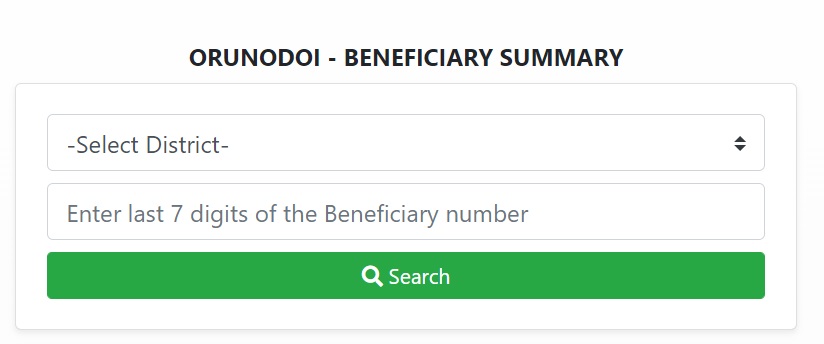
Orunodoi Scheme ListIf any beneficiary wants to check Orunodoi scheme list, then follow the process specified.


Orunodoi Scheme Online Application FormIf any beneficiary wants to file complaint regarding Orunodoi scheme, then follow the process specified here.
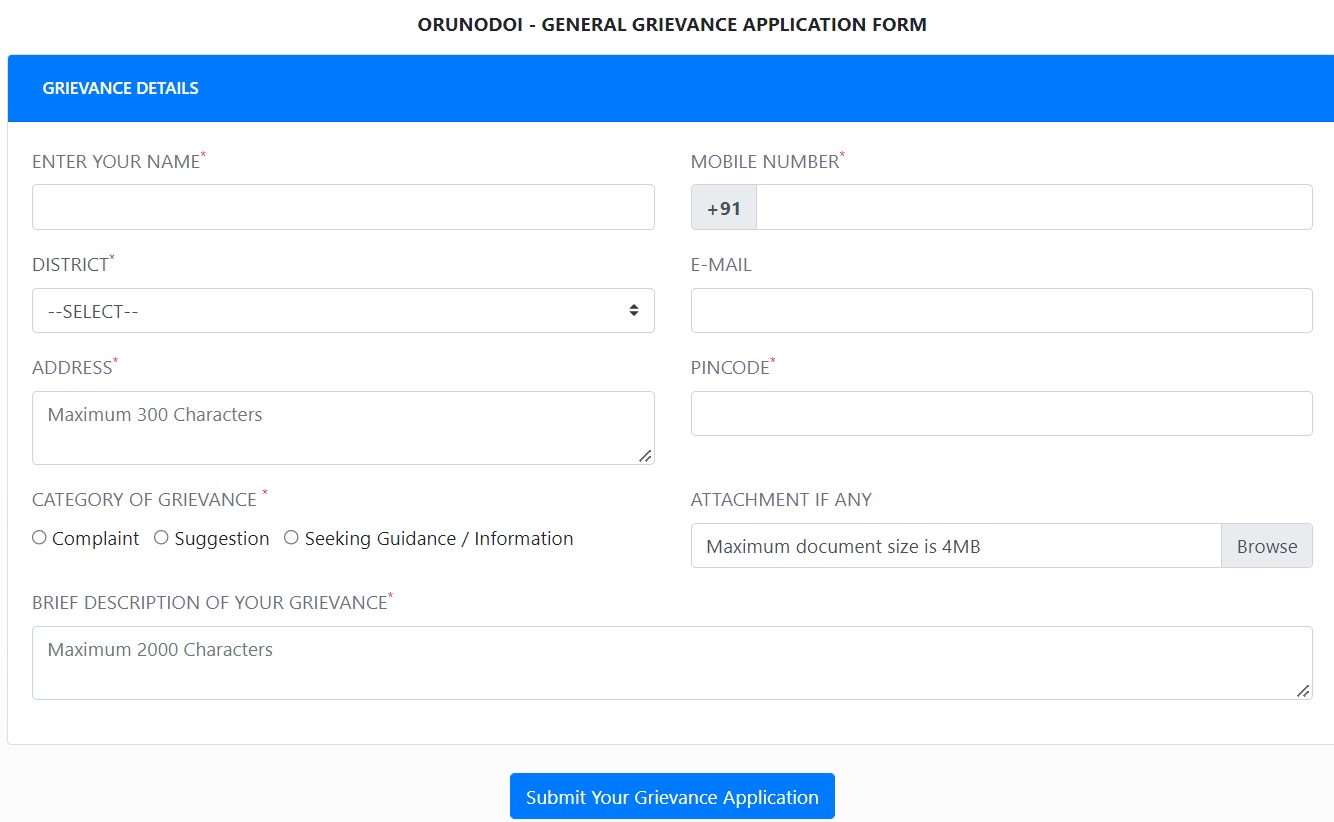
Orunodoi Scheme HelplineE-mail ID: orunodoidbt@gmail.com | ||||||||||||
| Posted: 23 Apr 2022 07:04 AM PDT The central government has launched PM-DAKSH Yojana portal and app on 7 August 2021. This scheme portal will make the skill development schemes accessible to the target groups of Backward Classes, Scheduled Castes and Safai Karamcharis. PM Daksh Yojana Portal Registration / Login starts at pmdaksh.dosje.gov.in for Online Training. This article will answer you questions like - What is PM Daksh Yojana Eligibility, target groups, list of documents, scheme objectives, key features, skilling programmes and other aspects regarding PM Daksh Online Training. The Social Justice and Empowerment Ministry, in a statement issued on Friday, said the Pradhan Mantri Dakshta Aur Kushalta Sampann Hitgrahi (PM-DAKSH) Yojana is being implemented by the Ministry of Social Justice and Empowerment from the year 2020-21. PM-DAKSH (Pradhan Mantri Dakshta Aur Kushalta Sampann Hitgrahi) Yojana is a National Action Plan for skilling of marginalized persons covering SCs, OBCs, EBCs, DNTs, Sanitation workers including waste pickers. 1. PM Daksh Yojana Portal Registration / LoginUnder the PM Daksh Yojana scheme, eligible target groups are being provided skill development training programmes on up-skilling/reskilling, short term training programme, long term training programme and entrepreneurship development program EDP. Union Minister for Social Justice and Empowerment Dr Virendra Kumar has launched PM-DAKSH portal and PM-DAKSH mobile app on Saturday. Link for PM Daksh Yojana Portal is https://pmdaksh.dosje.gov.in/Candidate Registration - https://pmdaksh.dosje.gov.in/student Student Login - https://pmdaksh.dosje.gov.in/student/login Institute Registration - https://pmdaksh.dosje.gov.in/institute Target Group and EligibilityCandidates of age group 18-45 years belonging to any of the following categories can apply for the training programme under PM-DAKSH:Persons belonging to Scheduled CastesCaste Certificate issued by Competent Authority of State Government. Other Backward Classes (OBCs) having Annual Family Income below Rs. 3.00 Lakh
Economically Backward Classes (EBCs) having Annual Family Income below Rs. 1.00 Lakh
De-Notified, Nomadic and Semi-Nomadic Tribe (DNT)Undertaking in the form of self-declaration of the candidate of his/her specific caste, date of birth and address alongwith the endorsement by the local Pradhan of the Community/Cluster to this effect. Safai Karamcharis (including waste pickers) and their dependantsOccupation Certificate Objectives of PM Daksh YojanaTo improve all-round competency & adeptness of 2.7 lakh persons, over the next 5 years, beginning with nearly 0.5 lakh youth in the first year i.e. 2021-22, from the following sections of the target group:
Types of Skilling Programmes in PM Daksh Online TrainingUp Skilling / Re-skilling
Short Term Trainings (focus on wage / self employment)
Entrepreneurship Development Programmes (EDP)
Long Term Courses (focus on wage / self employment)
Key Features of the PM Daksh Yojana
Action Plan for Skilling of SC, OBC, Sanitation Workers, TransgendersBackgroundThe Ministry of Social Justice & Empowerment (MoSJ&E), caters for empowerment of the socially, educationally and economically marginalized sections of the society including SCs, OBCs, Sr. Citizens, victims of alcoholism and substances abuse, transgender persons, De-notified Tribes (DNTs), EBCs, Safai Karamcharies, Waste Pickers and Manual Scavengers. Most of the persons of target group are having minimal economic assets; therefore, provision of training and enhancing their competencies is essential for economic empowerment/ upliftment of these marginalized target groups.Many of the persons of target group belong to the category of rural artisans who have become marginalized owing to coming of better technologies in market. There is also a need to empower the women amongst the target group, who, due to their overall domestic compulsions, cannot be involved in wage employment which normally involves long working hours and sometimes migration to other cities. Similar challenges are faced by members of Sanitation Workers & Waste Pickers communities who find it difficult to get into mainstream alternate occupations and are forced to therefore engage in self-employment activities. Similarly, the youth amongst the target group, owing to their educational backwardness also find it difficult to obtain employment with good compensation after undergoing short-term skilling courses. On the other hand it is observed that the long term vocational courses being conducted by ITIs with better market prospects are having large number of vacancies in the SC and OBC categories. In view of the above, there is a dire need to go beyond routine skilling and instead enhance their competency levels so that artisans may improve on their revenue generation capacities within their practicing vocations, the women may enter into self-employment thereby financially empowering themselves without neglecting their domestic activities and the youth may acquire long-term training and specialization in employable vocations giving them better standing in the job market. They would either require to undergo long term programmes including ITI courses with better market for jobs or alternatively imparted some entrepreneurial development training enabling them to offer some financing and start their own small ventures. With the above in mind, a National Action Plan for the marginalized persons of SC, OBC, EBC, DNT, Sanitation workers including waste pickers, manual scavengers, transgenders and other similar categories named 'Pradhan Mantri Dakshta Aur Kushalta Sampann Hitgrahi' (DAKSH) Yojana is proposed to be put in place with a multi-pronged strategy to improve the all-round competency and adeptness of and10 lakh persons of these categories over the next four years, beginning with nearly 1.5 lakh youth in the first year i.e. 2020-21 2. Categorization of Skilling ProgrammesThe MoSJ&E aspires to train persons from its target group over the period of 2020-21 to 2023-24, broadly in the following sub-categories:A. Up-skilling/Recognition of Prior Learning (RPL):Target Group:Marginal rural artisans belonging to SC/OBC/EBC/DNT categories and other such entrepreneurs in addition to sanitation workers, waste pickers and their dependant who constitute the bottom of the pyramid.Curriculum:The training would be in situ, and the trainers would approach the artisans in their works locations. On the vocation of practice such as pottery, weaving, clay & bamboo, metal work, carpentry, waste segregation, domestic workers along with financial and digital literacy etc. The trainer has to be a master craftsman or designer or a person who is well associated with the vocation. The training would consist of improving the implements, designs and processes so that the income would double from the occupation.Specifically in respect of sanitation workers including waste pickers and manual scavengers the curriculum will include the programmes on safe & healthy sanitation practices and RPL for waste pickers, for which QPs have been developed by NSKFDC and Skill Council for Green Jobs Certification would be aligned with the standard process of Institute of Excellence coordinating the training programme. Period of Training:The duration of the training programmes will be 32 to 80 hours and spaced over upto one month, duly keeping in mind the occupational hours of the trainees.Training Cost:The training cost will be limited to extent of Common Cost Norms (CCN) as applicable from time to time.Other Expenses:As the trainees are already employed, they will be paid Rs.2500/- per person per programme, in the form of stipend, for duration of training of Up-skilling/RPL, towards compensation of their wage loss, during the period of training.Share of Training Type:Upskilling/Reskilling will comprise of 30% of all training conducted by NSFDC and NBCFDC and 50% of training conducted by NSKFDC.B. Short Term Courses (focus on self employment):Target Group:Most disempowered groups belonging to SC/OBC/EBC/DNT and Sanitation Workers/Manual Scavengers/Waste Pickers (including dependents) categories who are illiterate/semi-illiterate and unemployed. Special focus on women, members of the transgender and beggars communities etc - with primary objective of training and providing assistance to start self-employment venture.Curriculum:The Curriculum of the training programmes will be as per National Skill Qualification Framework (NSQF)/National Occupational Standard (NOS), issued by Ministry of Skill Development and Entrepreneurship, Govt. of India in various job roles with focus on self employment opportunities such as self-employed tailors training, furniture making, food processing, carpet weaving, beautician workers, leather work, latex harvesting, tyre fitting along with financial and digital literacy etc. Every skill imparted shall have a component of Entrepreneurial Development Programme (EDP).Period of Training:The duration of the training programmes will be normally 200 hours to 600 hours and upto 5 months, as stipulated in National Occupational Standards (NOS) and Qualification Packs (QPs). Every training will have a component of linkage with Banks for assistance to start a self employment venture.Training Cost:The training cost will be as per Common Cost Norms as applicable and amended from time to time.Other Expenses:For non-residential training programmes, the trainees will be paid stipend (compensation of transportation charges), @ Rs.1500/- per month for SC candidates, Rs.1000/- per month to OBCs/EBCs/DNTs and Rs.1500/- per month to Sanitation Workers (including waste pickers) and their dependents.For residential training programmes, wherever necessary, the trainees will be provided boarding and lodging and expenses compensated as per CCN, for complete duration of the training programmes. No stipend will be separately payble except in case of Safai Karamcharis; Waste Pickers & their dependants who will be paid Rs. 500/- per month. In case of Manual Scavengers and their dependants, Rs. 3000/- per month (in compliance of the MS Act, 2013.) will be paid as stipend for both non-residential and residential training. For conducting skill development training programme for the sensitive target groups such as Transgenders, Beggars, Victims of Substance Abuse etc. the training providers would require additional facilitation for mobilization, handholding, post placement support, providing toolkit and other measures. Keeping in view of the above, following may be admissible in case of programme for these sensitive target groups: Handholding support for refreshment, conveyance and counseling etc. @ Rs.1000/- p. m. Tool-kit @ upto Rs.5000/- per trainee Mobilization and handholding @ Rs.500/- per trainee. Stipend amount @ Rs.1000/- p.m. for non-residential training as already stipulated in SDTP scheme of NBCFDC subject to 70% overall attendance Share of Training Type:Short term training will comprise of 20% of all training conducted by NSFDC and NBCFDC and 40% of training conducted by NSKFDC.C. Entrepreneurial Development Programmes (EDP):Target Group:SC and OBC youth who have preferably undergone skill training under the PMKVY and are having an entrepreneurial bent of mind.Curriculum:The Curriculum of the training programme will essentially be modelled on the programmes of Ministry of Rural Development being implemented by the RSETIs. The training would consist of sessions on Effective Communication Skills, Risk Taking Behaviour, Business Opportunity Guidance, Market Survey, Systematic Planning, Banking – Deposits, Advances and Lending, Costing & Pricing, Time Management, Working Capital and its Management, Business Plan Preparation etc.Period of Training:The duration of the training will normally 80 hours (10 days) or as stipulated by MoRD.Training Cost:The training cost will be reimbursed as per the norms of MoRD for compensation which are broadly modelled as per the Common Cost Norms.Other Expenses:Payment will be made as per Common Cost Norms/Guidelines of MoRD or other relevant Government documents, as in vogue.Assessment and certification charges of Rs.1500/- per candidate will be payable to assessing and certification body. Share of Training Type:EDP will comprise of 30% of all training of NSFDC and NBCFDC.D. Long Term Courses (for global class skills):Target Group:SC, poor OBC, EBC, DNT youth and Sanitation Workers/Manual Scavengers/Waste Pickers (including their dependants), transgenders etc who have been educated upto 10th class or more and having aspirations to be employed in sectors having good demand in job market with starting compensation of the range of at least Rs.20,000/- p.m & above with opportunities for placement abroad.Curriculum:The Curriculum of the training programmes will be as per NSQF, NCVT, AICTE, MSME, and other reputed certification programmes including those run by State Government entities in areas such as production technology, plastic processing, apparel technology, health care sector, tourism, aviation, nursery teachers training etc. Certification provided will be aligned with the processes of the concerned training programmes.Period of Training:The duration of the training programmes will be six months and above and usually upto 1 year, as stipulated by the concerned board/regulatory body of the training centre.Training Cost:The training cost will be as per Common Cost Norms for NSQF job roles or as stipulated by concerned board as applicable and as amended from time to time.Other Expenses:For non-residential training programmes, the trainees will be paid stipend (compensation of transportation charges), @ Rs.1500/- per month for SC candidates, Rs.1000/- per month to OBCs/EBCs/DNTs and Rs.1500/- per month to Sanitation Workers (including waste pickers) and their dependents.For residential training programmes, wherever necessary, the trainees will be provided boarding and lodging and expenses compensated as per CCN, for complete duration of the training programmes. No stipend will be separately payble except in case of Safai Karamcharis; Waste Pickers & their dependants who will be paid Rs.500/- per month. In case of Manual Scavengers and their dependants, Rs.3000/- per month (in compliance of the MS Act, 2013.) will be paid as stipend for both non-residential and residential training. Share of Training Type:Long Term Training will comprise 20% of all training of NSFDC and NBCFDC and 10% of all training of NSKFDC.The above four programmes will be implemented through the three Apex Corporations National Scheduled Castes Finance and Development Corporation (NSFDC), National Backward Classes Finance & Development Corporation (NBCFDC) & National Safai Karamcharis Finance and Development Corporation through whom an estimated 4.25 lakh persons will be trained during next four years, which will include 92,000 in the year 2020-21. Methodology of ImplementationNotional AllocationA Notional Allocation based on the SC population of the State (for SC candidates) and on the overall population of the State in the case of training of OBC/EBC/DNT, sanitation workers including waste pickers & other categories has been made for the year 2020-21. This allocation also takes into consideration the share of the various types of training as stipulated for the three Corporations at 2 (A) to (D) above and the need to have a minimum batch size.Training PartnersThe Corporation will extensively rely on State Skill Development Missions (SSDMs) who are expected to have ground level knowledge of the skill aspirations and employment opportunities in their state as also access to literature on Skill Gap analysis carried out by NSDC. In addition to above the Corporation over the past five years have identified some credible Training institutes (mostly government or having significant government holding) as also Sector Skill Councils (constituted under the aegis of MSDE) and some foundations/trusts of Corporate excellence who have a good track record of conducting relevant skill training programmes and placing the trained candidates. \ Allocation of ProgrammesFor 2(A), 2(B) and 2(D) Expression of Interest (EOI) will be floated seeking proposals from SSDMs and the agencies identifiedWhile SSDMs are expected to submit proposal in sync with the aspirations and employment opportunities in the state, to eliminate chances of the other councils/institutes not submitting the state relevant proposal, they will be asked to have the proposals duly endorsed by relevant District Skilling authority or SSDM authorized functionary confirming that the proposals are relevant to the district/state for enabling wage/self-employment. In case of NSKFDC, the training agency will require to submit the proposal duly endorsed by Municipalities, Cantonment Boards, Gram Panchayat, Railways, and Government Hospitals etc. confirming availability of sufficient numbers of the target group who can be imparted training in proposed vocation. After receipt and scrutiny of the proposals, the concerned Corporation will allocate numbers to the applicants giving due consideration to the past record of the agency in implementing the programme, assessment of employability of the job roles on offer etc. Specifically in case of NSKFDC, preference will be given to training of Manual Scavengers (MS). If required, the applicants will be called for interactions and also to resubmit modified proposals. In case of in-sufficient proposals from a state, the number may be transferred to other states with good track record and from where the proposals have been received. Specifically with respect to 2(C) i.e. EDPs, an MoU is being signed with NACER, the National Centre for Excellence of RSETIs who are under the aegis of Ministry of Rural Development for carrying out EDP programmes and building bank linkages for primarily rural youth many of whom belong to the target group of the Corporations. Simultaneously other reputed government/ government promoted agencies carrying out EDP will also be engaged with, subject mutual consultations and consensus. Implementation of Programmes
OutcomeThe targeted outcome of the competency enhancement training programmes will be as under:(4.1) Up-skilling Programmes:Enhancement of earnings of livelihood as self certified by the beneficiaries. (4.2) Short Term Training Programmes:The overall placement of the trained persons should by 70% in wage/self employment. (4.3) Entrepreneurship Development Programme:After completion of EDP training, at least 70% candidates should be self-employed and/or wage employed to earn their livelihood. (4.4) Long Term Training Programmes:The overall placement of the trained persons should by 70% in wage/self-employment with at least 70% of those employed being in wage employment. MonitoringThe implementation of the training programmes will be monitored as under:The Apex Corporations will directly monitor all the training programmes. This will include participation either directly or through their representatives in the Selection Committee Meetings, review of Selection Committee meeting minutes having details of the trainees, e-based and direct surveillance of the training programmes, consolidation of details of trained beneficiaries in the designated portal etc. Convergence with ITI System of Vocational EducationA vibrant system of training exists in the ITIs set-up under erstwhile Ministry of Labour and presently with MSDE. These ITIs offer vocational selective long term courses with good employability. However the capacity of these ITIs is not being fully utilized especially in respect of seats reserved for the SC category including sanitation workers, manual scavengers and their dependants.The Ministry will therefore put in place an incentive system to facilitate Long Term courses for six lakh persons, belonging to these target groups, in the industry linked ITIs which have good job employment potential. For this the Ministry will establish linkages with MSDE/DGET and devise a system for incentivizing the ITIs to mobilize poor SC and dependents of sanitation workers including waste pickers and manual scavengers and mentor them during course of training. In this manner a total of 6,00,000 youth will be trained by filling reserved vacancies prevailing within ITI system in next 4 years beginning with 50,000 in the first year 2020-21. To start with, a provision of Rs.6000/- per trainee is being made for incentivising the groups as mentioned above and accordingly Rs.30.00 Crore is budgeted for this activity. Target Group:SC candidates as also dependents of sanitation workers including waste pickers and manual scavengers and with minimum 10th pass, selected a basis by a suitable process.Curriculum:The Curriculum of the training programmes will be as per NCVT in various trades having good employment potential as assessed by ITI.Period of Training:Duration of the training programmes will be as per norms of MSDE/ DGT.Training Incentive:A training incentive of upto Rs.6000/- per trainee for any specific purpose as mutually agreed upon by MoSJE & MSDE.Payment of training expenses:The MoSJ&E will release the funds towards mobilization/mentoring and or training of target group to MSDE/ affiliated agencies directly based on mutually agreed procedure.More details on PM Daksh Yojana at https://nbcfdc.gov.in/pm-daksh/en, FAQ's - https://pmdaksh.dosje.gov.in/faq, Contact - https://pmdaksh.dosje.gov.in/contact | ||||||||||||
| pmayg.nic.in Registration 2022 | IAY / PMAY-G Application Form PDF Download (Apply Online) Posted: 23 Apr 2022 06:58 AM PDT Pradhan Mantri Awas Yojana Gramin (PMAY-G) was previously known as Indira Awaas Yojana (IAY). Central govt. led by PM Narendra Modi started this social welfare flagship programme to provide housing for the rural poor in India. A similar scheme for urban poor was launched in 2015 as Housing for All by 2022. Indira Awaas Yojana was launched in 1985 by Rajiv Gandhi, the then Prime Minister of India, as one of the major flagship programs of the Ministry of Rural Development to construct houses for BPL population in the villages. Now the central govt. is inviting PM Awas Yojana online application form at pmayg.nic.in. People can now make pmayg.nic.in registration 2022 to construct their own house. The rural housing scheme will help achieve housing for all by 2022 in all the rural areas across the country. Beneficiaries can check their IAY / PMAYG Beneficiary Details or SECC Family Member details using the link - IAY / PMAY-G Beneficiary List & SECC Family Member Details. Also, All India Final BPL List 2022 is now available. To reduce gap in rural housing, IAY has been re-structured into Pradhan Mantri Awaas Yojana – Gramin (PMAY-G) w.e.f. 1st April, 2016. Now people can apply online at CSCs or download IAY / PMAY-G Application Form PDF. The total number of homes to be constructed under PMAY-G has been increased by 33% from 3 Crore to 4 Crore by the year 2022 (revised PMAY-G targets). Pradhan Mantri Awas Yojana – Gramin will be implemented in rural areas across the country except Delhi and Chandigarh. Below are the highlights of the housing for all by 2022 - Rural. PM Awas Yojana Gramin (PMAY-G) Registration 2022The complete process to make PMAY Gramin Registration is defined in the User Manual. Download PMAY-G Manual and check out the application form here:-


Edit IAY / PMAYG Registration Details 2022All the personal details of the beneficiary are editable as shown in the picture. 2. If beneficiary name is unknown or blank then the Name as per Aadhaar will be considered as beneficiary name for sanctioning the beneficiary.  MGNREGA Job Card Number details of the beneficiary can be edited. 2. SBM (Swachh Bharat Mission) number can also be edited. Note:- The bank details of the beneficiary can't be edited from this Registration module. To facilitate this edit, freezing module is recommended. |
| You are subscribed to email updates from New Sarkari Yojana List 2022 (नई सरकारी योजनाओं की सूची). To stop receiving these emails, you may unsubscribe now. | Email delivery powered by Google |
| Google, 1600 Amphitheatre Parkway, Mountain View, CA 94043, United States | |


 Hello, my name is Ankit Sahu. I'm a 25 year old self-employed Pirate from the Chhindwara.