On July 19, as Sahida Fakir stepped out of her Navi Mumbai home to buy dinner, she was allegedly picked up and detained by Mumbai police's Chembur crime branch. Four days later, her husband Jumman Fakir learnt that she was forcibly pushed across the bord…
On July 19, as Sahida Fakir stepped out of her Navi Mumbai home to buy dinner, she was allegedly picked up and detained by Mumbai police's Chembur crime branch. Four days later, her husband Jumman Fakir learnt that she was forcibly pushed across the border into Bangladesh on suspicion being an illegal immigrant.
Even as Sahida remains steeped in uncertainty, away from her family in Bangladesh to this day, a writ petition filed in the Supreme Court was heard by a Bench comprising Chief Justice Surya Kant, Justice Joymalya Bagchi and Justice V Mohana on September 17. The court sought a response from the Centre within four weeks.
A native of Gobindapur village, Swarupnagar block in West Bengal's North 24 Parganas district, Sahida was not given any opportunity to established her Indian citizenship before being detained, her husband alleged.
Alt News spoke to Sahida Fakir, who narrated to us the harrowing experience of being pushed into no-man's land at midnight and wading through a marsh to reach the Bangladesh side. According to her, she was picked up by the Mumbai police and kept in a detention centre for four days before being pushed out of India. In this duration, the police didn't produce her before a magistrate.
"When I was pleading with Mumbai police officials to let me go, they just sneered at me and said we need to fill up the empty seats of the deportation airplane," she alleged, asking, "How can they be so inhumane? What is my fault? Being a Muslim who speaks Bengali?"
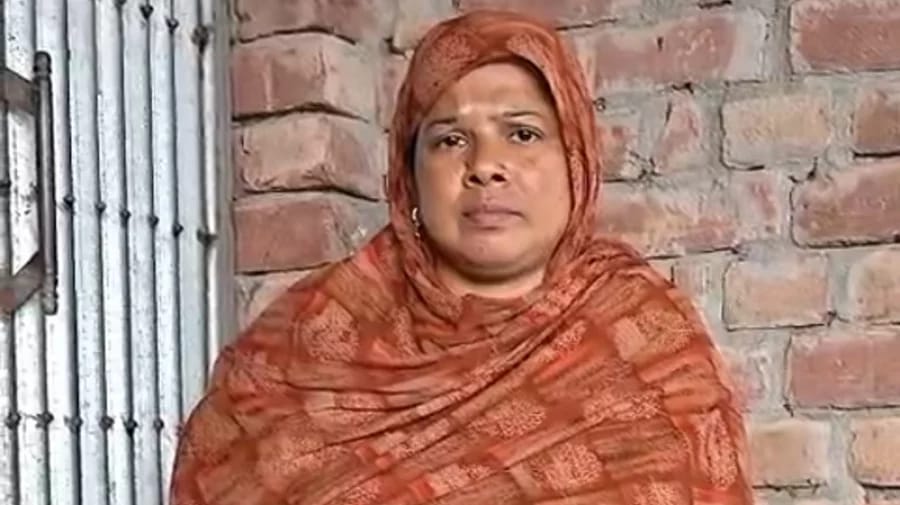
Sahida Fakir
Jumman told Alt News that he reached Chembur crime branch office on July 19 and attempted to prove his wife's citizenship by furnishing her documents. "The police said that they would need few days to verify her documents and, if necessary, would ask for additional documents. I went to the office again on July 22 with more papers, but the next day, they informed me that she had been pushed into Bangladesh. When I asked how they could do such a thing without giving us any opportunity to prove our citizenship, I was thrown out of the office," he claimed.
According to Jumman, after almost a week, Sahida called from Bangladesh to inform him that she had allegedly been expelled from India through either the Assam or the Northeast border, and that she was currently living with a family from Satkhira that provided her shelter. "She called me from an unknown number and was crying inconsolably. A family from Bhadiyali village in Kalaroa Upazila of Satkhira was sheltering her, and the Bangladesh police posted two armed guards for her protection outside the residence," he said. "I get to speak to her occasionally by calling the Bangladeshi family's number. She is a thyroid patient. Local journalists had arranged some food, clothes and medicines for her, however, that stock is fast depleting."
The couple has lived in Mumbai for the last 20 years — Jumman works as a car cleaner while Sahida worked as a domestic help. Their elder son Sahin Fakir lives in their native village in Bengal's North 24 parganas district while 13-year-old Samim Fakir lived with his parents in Mumbai. After Sahida's pushback, Jumman and Samim left Mumbai and returned to Swarupnagar.
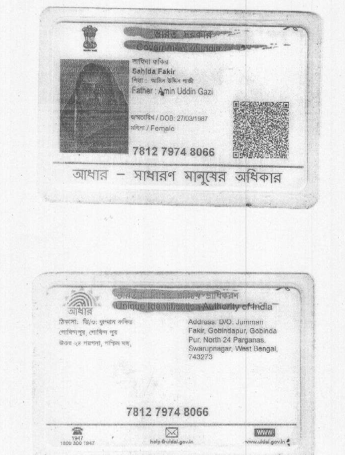
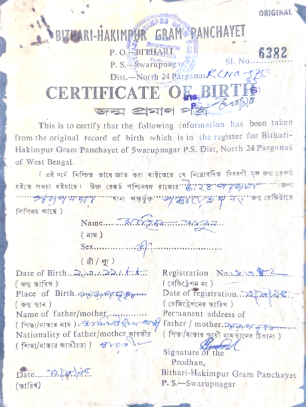
According to Sahida's citizenship documents, including her birth certificate, her Aadhar card, voter card, PAN card, accessed by Alt News, she was born in November 1988. On October 19, 1995, the Bithari-Hakimpur Gram Panchayat, under the Swarupnagar Block, issued her birth certificate (serial number 6382).
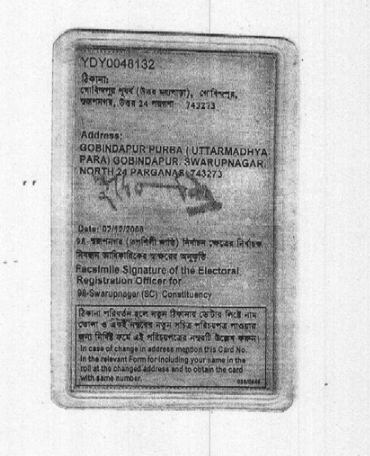
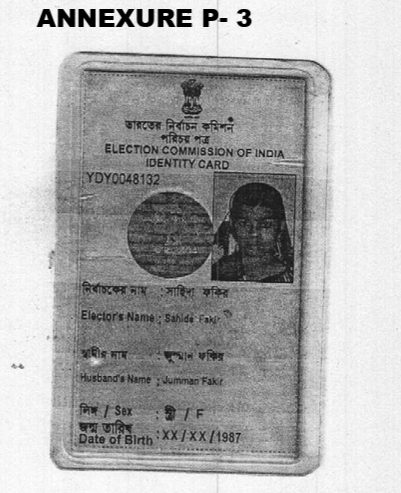
Copies of Sahida’s voter and Aadhar cards which clearly mentions her address as Gobindapur
Sahida's birth certificate, which mentions her place of birth in West Bengal
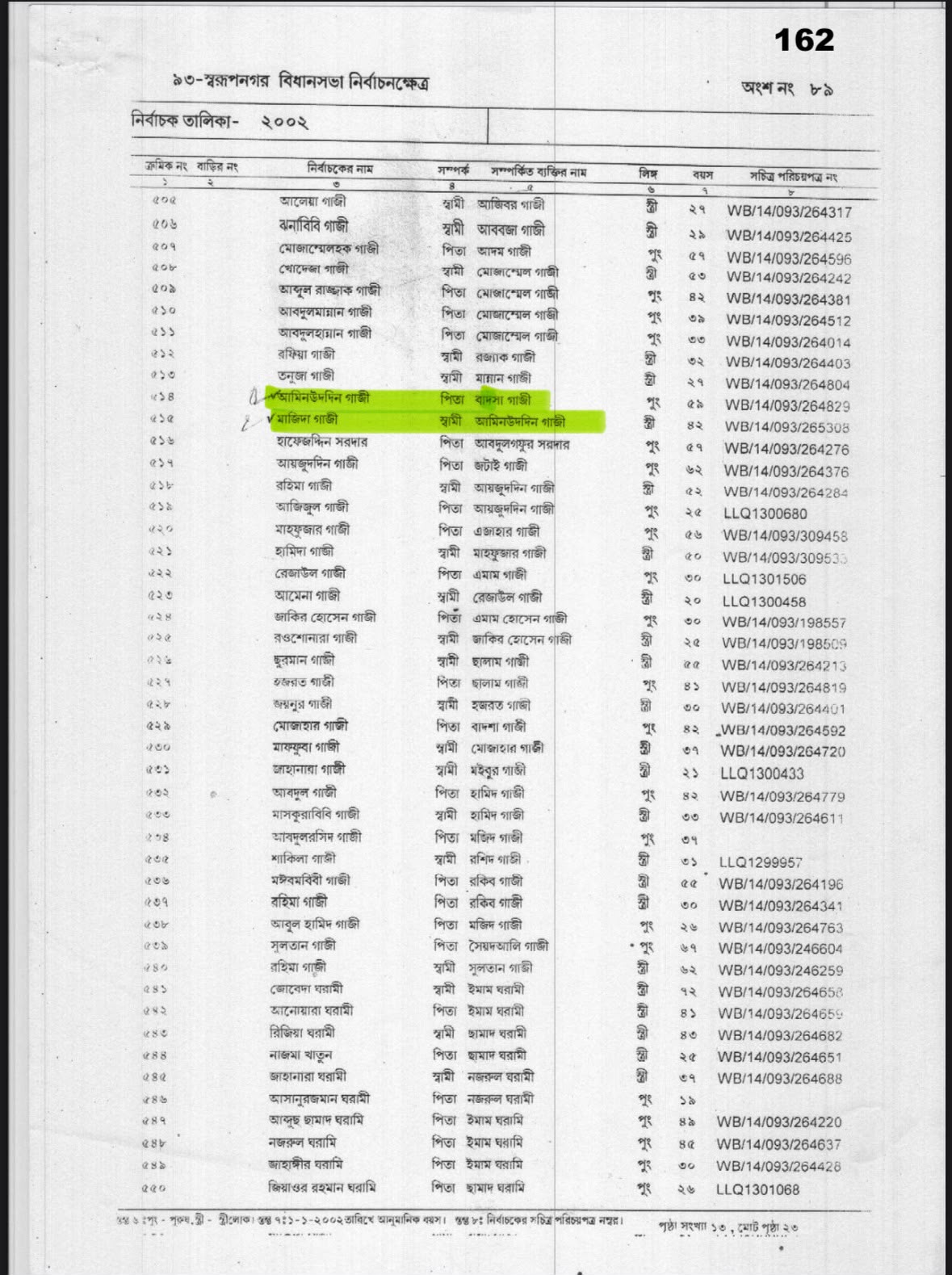
Sahida's father, Aminuddin Gazi, is listed in the 2002 SIR electoral roll (Part 89, Serial 514, Swarupnagar assembly); her grandfather, Badsha Gazi, is also listed in the 1952 electoral roll for Swarupnagar assembly. See below:
On January 29 this year, the Bithari-Hakimpur Gram Panchayat issued a family genealogy stating that Badsha Gazi's son, Aminuddin Gazi, had 14 children, including Sahida. Sahida's name also appears in land records accessed by Alt News. Although Jumman's name appeared in the final SIR list, Sahida was placed in the "under adjudication" category. However, she had appealed against her exclusion.
Following her 'unofficial deportation' to Bangladesh in July, Sahida's family was able to obtain a certificate from Swarupdaha Free Primary School on August 9, which states that she studied there from 1994 to 1998. Her transfer certificate, issued by Jamia Islamia Girls' High Madrasa located in Swarupnagar block for Class 8 in 2008, is also available.
Sahida's Account
Speaking to Alt News, Sahida said, "I was kept at the Chembur detention camp for four days. My phone, the money that I was carrying to buy chapatis for my family and my Aadhaar card — everything was snatched away. I begged the police, fell at their feet to let me contact my family, only then did they allow me to make a call for a few seconds. After I informed my husband, he came to the Chembur crime branch office to furnish all the documents to prove my Indian citizenship, but the police didn't even bother to see or check them," she alleged.
"After spending four days at the detention centre, they stacked several others and me onto a bus with dark curtains, so we couldn't see where we were going. If anybody even tried to pull the curtains slightly, the Border Security Force men would beat and abuse them. We later realised that it was the airport. From there we were boarded onto an aircraft, and they took us somewhere on the Assam or Northeast border. I don't know any of these places, but heard it from other people in our group," she further alleged.
According to Sahida, she was placed in a group of around 200 people who were also pushed into Bangladesh.
"After we landed, we were taken to a detention centre. From there, we were packed into buses in batches. The bus took us to several other camps. They kept us waiting in some camps for 10 hours, and in some for about 3-4 hours before moving us out. Finally around 1 am, the BSF pushed all of us back into no man's land," she claimed.
"We were in a marsh with the muck reaching my neck in some places. I had to wade through the mud on no man's land to finally reach the Bangladesh side of the border by daybreak," she added.
The others told Sahida that they could be at the Feni border, near Chattogram of Bangladesh.
Following this, according to the petition submitted in the Supreme Court by her son, Sahin, Sahida somehow managed to reach the Petrapole-Benapole border area after a few days. There, the Border Guard Bangladesh (BGB) apprehended her, but due to humanitarian reasons, she was provided shelter and was finally able to contact her family on July 31, the petition said.
"A farming family from Bhadiyali village has sheltered me, and despite their financial constraints, they are doing their best to feed me. But do I deserve this hopeless situation? Why do I have to survive on other people's grace? I have diabetes and thyroid issues. Since July 19, I haven't had my medicine. My family's life has been turned upside down. My husband had to flee Mumbai, leaving his meagre employment and my younger son had to leave his studies," she lamented.
Alt News contacted an officer from Chembur crime branch, who refused to comment on the matter, stating that they are "officially required not to speak on such matters."
We also
Legal Tangle: Contentious SOP, Loopholes in Govt Order
On August 17, Sahin moved the apex court with a petition challenging his mother's apprehension, detention and forcible expulsion to Bangladesh, demanding that she be brought back to India. The petition argued that the Mumbai police's actions directly contradicted the provisions of Article 21 of the Constitution.
The petition also challenged the legality of the Standard Operating Procedure (SOP) dated May 2, 2025, titled 'Procedure for deportation of illegal Bangladeshi nationals/Rohingyas', and the 'Immigration and Foreigners Order, 2025', insofar as it permits or facilitates removal of persons apprehended within India without the safeguards prescribed by law and the Constitution.
The SOP from May 2025, published by the Union ministry of home affairs (MHA), establishes guidelines for 'deportation/removal/expulsion' of Bangladeshi nationals and Rohingyas. According to the SOP: "All State Governments/UT Administrations shall set up a Special Task Force in each District under the police of the State/UT to detect, identify and deport/send-back illegal immigrants from Bangladesh/Myanmar settled in the State/UT concerned."
"If the suspected Bangladesh/Myanmar national claims Indian citizenship and residence of a place in any other Indian State/UT, the concerned State Government/UT would send to the Home Secretary of the State/UT and District Collector/District Magistrate of the District from where the suspected person claims to hail, the details including name, parentage, residential address, details of near relatives etc. The State Government/ UT/Collector/District Magistrate concerned in turn will ensure that an appropriate report is sent to the deporting State Government/UT after proper verification within a period of 30 days," the SOP reads.
It is important to note here that the SOP doesn't mandate an FIR under theImmigration and Foreigners Act, 2025, if a suspected Bangladeshi or a Rohingya is apprehended and due investigation, enabling anybody under suspicion of being an illegal immigrant to be simply expelled from India.
A Supreme Court advocate, requesting anonymity, told Alt News that the SOP is inhumane as it empowers the State and the border guarding forces such as the BSF to push back suspected 'Bangladeshi and Rohingya' infiltrators into 'no man's land' without any judicial process. The SOP also mandates the handover of suspects to the relevant border guarding forces of Bangladesh and Myanmar, thus enabling the Indian border guarding forces to exercise their powers arbitrarily.
As contention around this SOP rose, the Indian government initiated'The Immigration and Foreigners Order, 2025' — published in the Gazette of India on September 1, 2025, effectively overriding the provisions of the earlier SOP. According to this order, if a suspected foreign national is apprehended without his/her travel document, such as a passport, then that person's nationality has to be first ascertained by that person's Nation. After it has been proved beyond doubt that the person is an illegal immigrant, the deportation process will take place.
As per Chapter 3, Article 12(4)(c) of the said Order, it is clearly mentioned: "In the absence of a valid passport or other travel document, the authorities referred to in sub-paragraph (3) may immediately take appropriate steps for getting the nationality verified and for issuance of travel document in favour of the illegal migrant from the Embassy or High Commission of the country concerned in India through the Ministry of External Affairs and necessary steps shall be taken by such authorities to deport the illegal migrant from the country as soon as the travel document is received."
Based on Sahida's account of her 'deportation', however, it becomes clear that provisions of the Order were not followed. Further, even though certain provisions of the previous SOP were applied, the process, or rather the lack of it, in which she was pushed into Bangladesh, contradicts the rest of it.
In a similar case reported byScroll.in, 66-year-old Dablu Sheikh and his three sons were picked up from their home in Suti, Murshidabad, under suspicion of being Bangladeshis. They have been missing for over 40 days. Sheikh's father, Sk Samjani, was also a voter in the Suti Assembly constituency in 1966 and 1995, the report stated, adding that the inspector-in-charge of Suti police station said the four persons were illegal Bangladeshi infiltrators, and thus had been deported to Bangladesh. The officer further said that no FIR was registered against the four men under the Foreigners Act, as they were detained following the Union government circular from May 2025, and directly sent to the Jangipur holding centre. The report suggests that they were deported to Bangladesh from the holding centre.





 Hello, my name is Ankit Sahu. I'm a 25 year old self-employed Pirate from the Chhindwara.


